
In the energy sector, as with any capital-intensive industry, the monetary performance of an investment is critical. Energy production investors and developers need a reliable forecast of a site’s financial performance, with one of the key factors influencing that forecast being grid access curtailment.
There can be various reasons for access curtailment of an energy production site. The two most common are:
- Constraint management actions taken by an Active Network Management System (ANMS)
- Faults and outages on network assets
ANMS curtailment occurs when network asset thermal limits, or in some cases statutory voltage limits, are reached or exceeded. These ‘network constraints’ are managed by ANMS actions to protect the network. ANMS is also applied at some Grid Supply Point (GSP) interfaces between the distribution and transmission networks, where GSP Technical Limits, enabled by ANMS actions, ensure that constraints on the transmission network, as well as at the GSP, are adhered to.
Outage-related curtailment occurs when energy production sites are affected by outages or faults on the network assets in the vicinity of their point of connection (PoC), on either the customer or utility side of the PoC. In some cases, the utility company applies inter-tripping schemes that will disconnect the energy production site should a network asset go out of service either through a planned event such as switching for maintenance or an unplanned event such as a fault causing network protection systems to switch out or disconnected network assets. In some cases, the inter-tripping scheme may be triggered by exceedance of a thermal or voltage threshold.
Outages/Faults/Inter-trips
Planned outages and unplanned fault-related outages can occur at every network asset, and their duration and frequency will vary. Distribution Network Operators (DNOs) take steps to maintain network reliability and minimise the impact of outages on demand customers, however inter-trip schemes may be applied to energy production sites as part of these mitigations and temporarily remove grid access.
These inter-trip schemes can have significant effects on a site’s energy production and should be carefully studied. The impact on site curtailment depends on three factors:
- when outages occur (time),
- how often outages occur (frequency), and
- how long outages last (duration).
Unplanned outages are, by nature, relatively unpredictable in their timing, frequency and duration. Planned outages, by contrast, are far more predictable.
Probabilistic Outage Assessment
At SGS, we derive representative estimates of the impact of both planned and unplanned outages on energy production and site curtailment through a Probabilistic Outage Assessment. The assessment typically investigates a range of scenarios, including unplanned (fault) outages; short-term planned (maintenance) outages combined with unplanned outages; and, where applicable, long-term planned outages associated with maintenance or network upgrade works combined with unplanned outages. A further scenario may also be considered which combines both short and long-term planned outages with unplanned outages.
Planned outage assumptions are based on either DNO maintenance schedules or typical maintenance programmes for the network assets under review. Historical outage data indicates that, in addition to scheduled maintenance outages, there are often further short-duration maintenance-related outages that arise from reactive maintenance activities. These interventions are typically undertaken to prevent more significant equipment failures and the resulting longer-duration unplanned outages.
Model Inputs
The timings, frequencies and duration of outage scenarios can be defined by:
- Mean Time to Failure (MTTF) of all DNO assets directly impacting a site’s network access, including assets associated with triggering any inter-trip arrangements.
- Mean Time to Repair (MTTR) of all DNO assets directly impacting a site’s network access, including assets associated with triggering any inter-trip arrangements.
- Historical records of planned and unplanned outages ideally spanning a minimum 10-year period.
- Planned maintenance and work schedules on all DNO assets directly impacting a site’s network access, including assets associated with the triggering of any inter-trip arrangements.
Monte-Carlo Method
Using these inputs, a Monte-Carlo method is applied to estimate a quantity based on a probabilistic model of a system, using random sampling. In practice, this involves estimating when the site will be subject to planned and unplanned outage or fault events that reduce their network access. Planned outage schedules may identify outage durations, however, the exact timing throughout the year is typically unknown, particularly for reactive maintenance outages. Hence, a Monte-Carlo method can be applied to planned as well as unplanned outages, although timings may be restricted to a specific set of months.
The probabilistic model is used to sample a large number of network states, generated from the probability distributions associated with asset MTTF, planned outages and historical outage data. Network states with a higher likelihood of occurrence are sampled more frequently than less ones. For example, if an outage event has occurred and results in an inter-trip event, the calculated export for that sample will be zero, but this would only occur in a small number of samples, reflecting its low probability. The average export across all samples then provides an estimated average export per month.
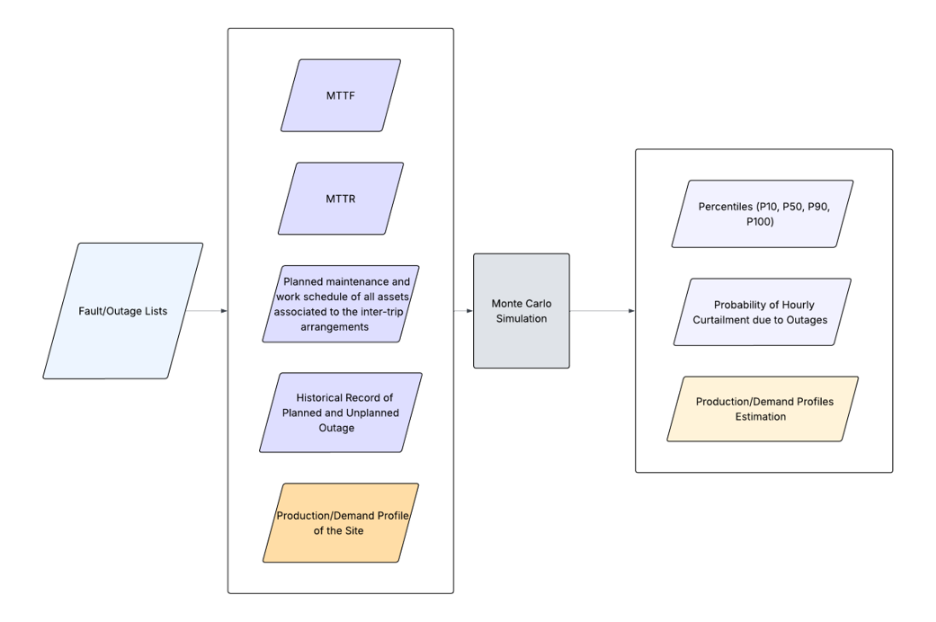
Figure 1: Probabilistic Outage Analysis
Each Monte-Carlo run approximates an annual production profile for the study site. The variance across all Monte-Carlo runs indicates how the production will vary from year-to-year over the site’s lifetime, reflecting the occurrence of outage events.
The simulation results are then used to estimate the probability of network access restrictions, expressed as the average probability of restriction to production or demand in each hour of each month over the defined study period, as illustrated in Figure 2. The hourly results can be colour coded for a quick visual representation of hours with higher probability of curtailment risk.
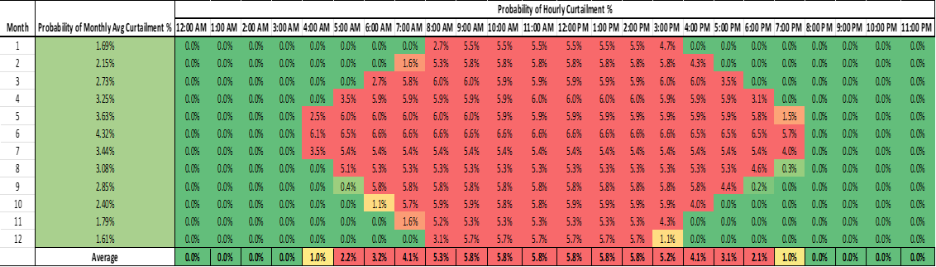
Figure 2: Probability of Hourly Curtailment due to Outages
The method can be repeated to investigate the sensitivity to various scenarios as desired by the site developer or investor. It can also be combined with deterministic ANMS curtailment assessments to obtain a more representative estimate of site production: accounting for both ANMS curtailment actions and the probabilistic impact of planned and unplanned outages.
What do the results mean for Developers?
A representative probabilistic assessment can be significant for the economic KPIs of a development site, directly indicating the monetary performance. Developers can use the outputs to plan the charging and discharging schedule for BESS sites, and to anticipate production and demand restrictions on the corresponding distribution network.
The key percentile results can be derived from the probabilistic assessment as illustrated graphically in Figure 3 and recorded in Table 1. These results will indicate the effect of outages and faults on the site production, feeding directly into the economic analysis for the development.
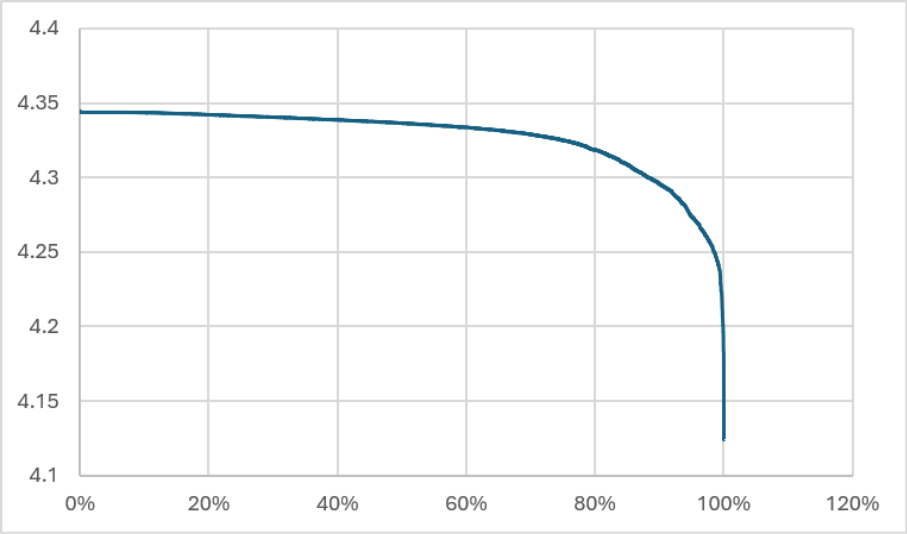
Figure 3: Percentile Distribution of the Average Power Export (MW)
|
|
P100 |
P90 |
P50 |
P10 |
|
Curtailment % |
6.65% |
1.45% |
0.22% |
0.01% |
Table 1: Probabilistic Assessment Percentile Results
Let's Discuss
As the electricity network continues to evolve, understanding constraints, curtailment risk and connection opportunities has never been more important.
At Smarter Grid Solutions, we work with developers, investors, DNOs and transmission network stakeholders to provide specialist modelling, analysis and advisory services that support informed decision-making. Backed by years of experience delivering advanced energy asset control solutions and detailed network studies, we help clients unlock value from renewable energy and storage projects while navigating increasingly complex network challenges.
Interested in learning how our expertise could support your project? Get in touch with our consultancy team to start the conversation.
Leave a Comment